


QCT Lab

IFAE Research Groups

Quantum Computing Technologies Group

  • Quantum Computing Technologies

    Achieving an advantage over conventional computers to solve problems which are ubiquitous in society.

    QCT Lab
  • Quantum Computing Technologies Group

    Quantum Computation (QC) is arguably the most revolutionary of all new quantum technologies, as it may transform many industrial sectors with a direct impact on society. In the past five years, the field has experienced a huge transformation as it is being adopted and developed by industry after two decades being an almost purely academic endeavor.

    There exist today small-scale prototypes produced by both research groups and large corporations. Those devices are getting powerful enough to provide advantages over conventional computers in specific applications. However, in order to achieve the long-sought “quantum supremacy”, several key developments are still necessary.

    IFAE is fully engaged in this technology since 2019. The particular implementation developed at IFAE, quantum annealing, is one of the most promising avenues by which to achieve an advantage over conventional computers by solving optimization problems which are ubiquitous in society (delivery, traffic, chemistry, etc.).

    The QCT group develops superconducting circuits for applications in quantum computation. By employing Josephson-junction technology, the group engineers superconducting qubits for the implementetion of quantum algorithms. Part of the research is focused on improving the qubit quality by mitigation of environmental noise sources, while at the same time the circuits are used to investigate fundamental physics of quantum optics phenomena.

    QCT Lab
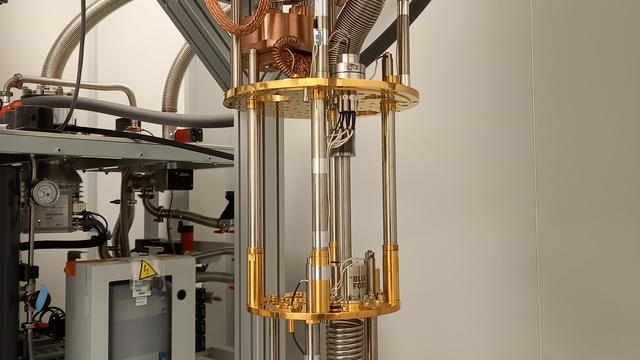
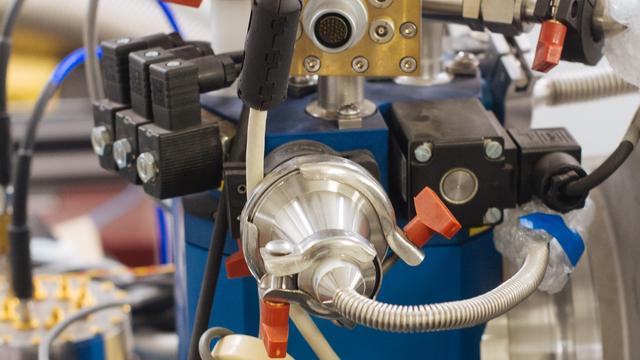
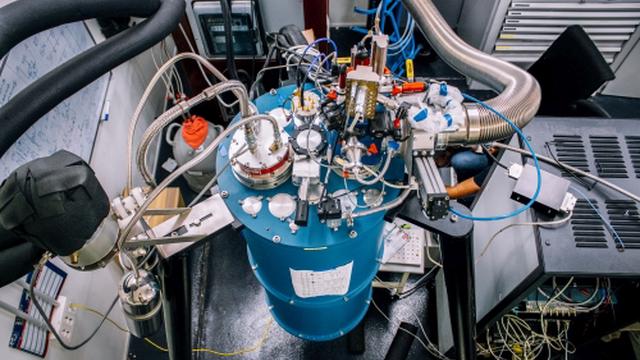
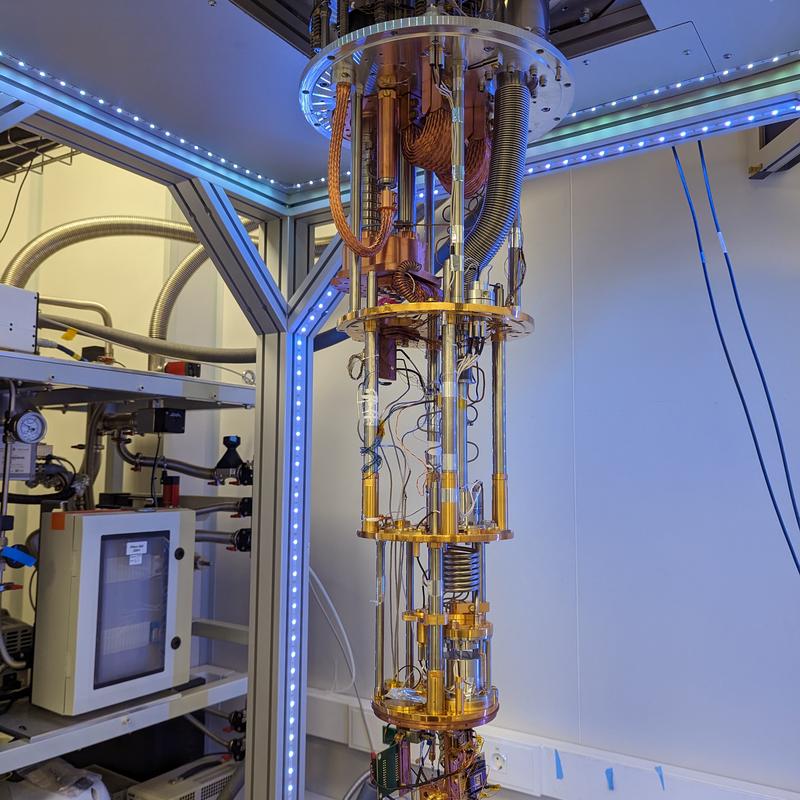
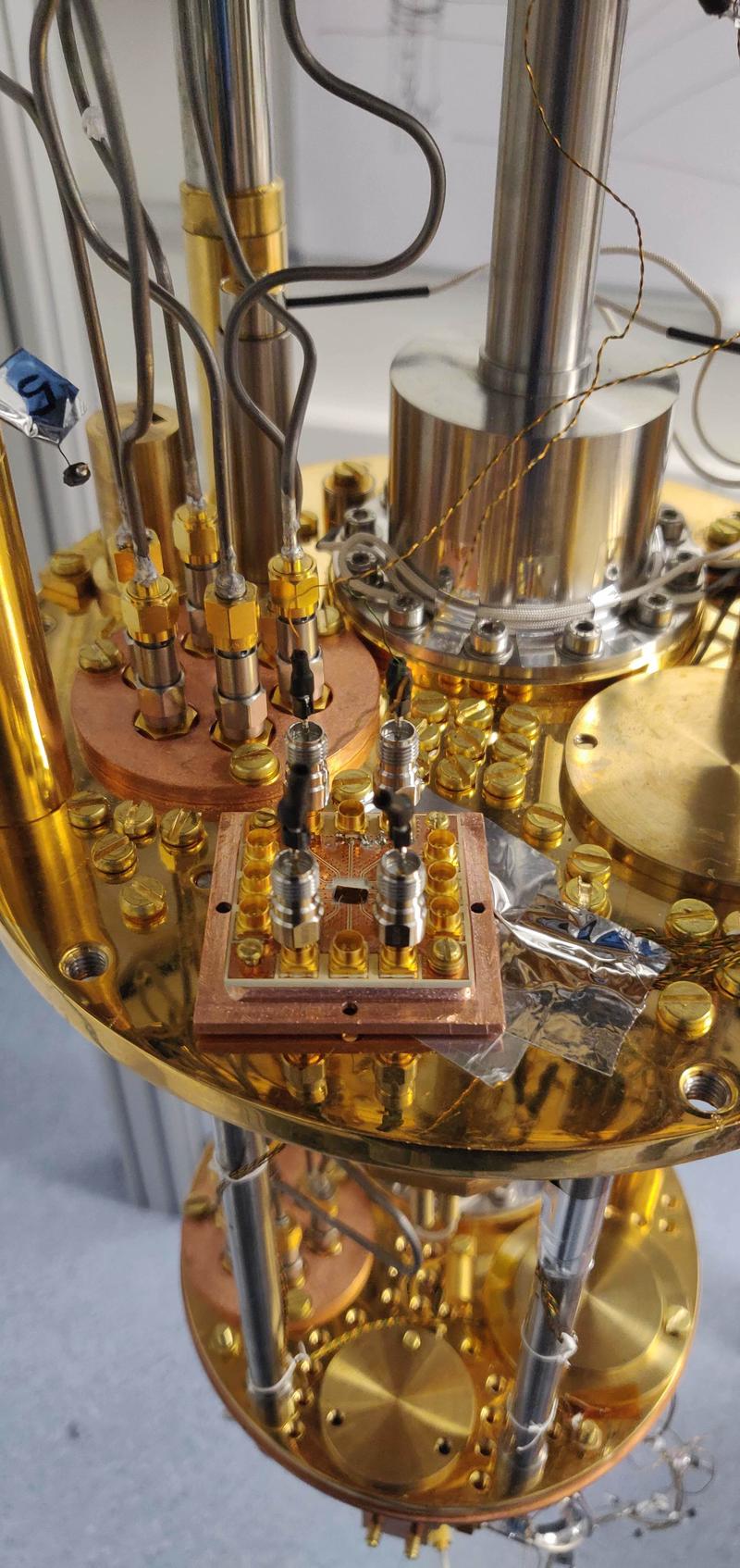
    Refrigerator at the IFAE QCT Lab Credit: IFAE QCT Group
    In 2020, the QCT group achieved the complete construction of its laboratory at the IFAE workshop. The new laboratory was already used to complete the first complete work performed at IFAE, the demonstration of a single qubit as a universal approximant. This new quantum algorithm was deviced by the group led by Prof. J. I. Latorre, currently the director of the Center for Quantum Technologies in Singapore, and was implemented using the single superconducting qubit device that was fabricated by the group of Prof. Martin Weides at the Karlsruhe Institute of Technology. The initial round of measurements had been performed at the Catalan Institute of Nanoscience and Nanotechnology (ICN2) in the lab of Prof. S. O. Valenzuela while the IFAE laboratory was being built. This quantum algorithm uses the qubit properties to approximate the value of any bounded mathematical function after a series of quantum gates applied to the qubit. The experimental demonstration showed full agreement with the simulated values. A preprint was produced in early 2021.
    QCT Lab
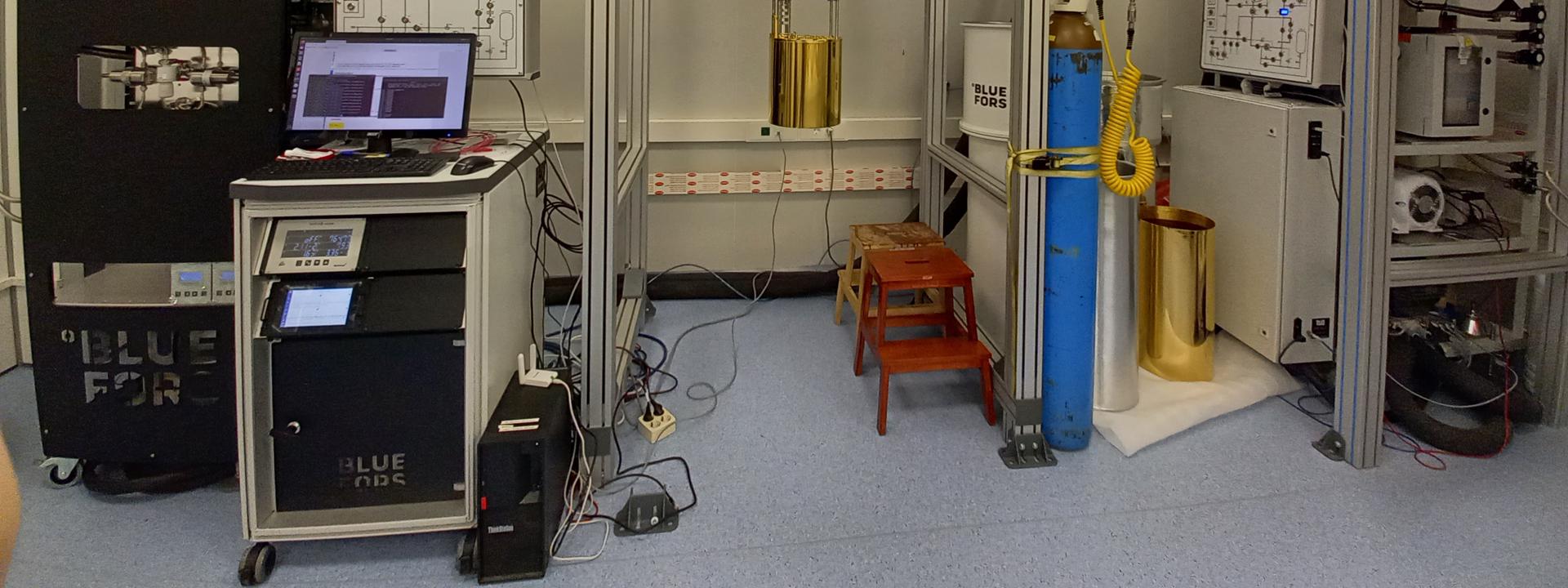
    QCT Lab Credit: IFAE QCT Group

    You can find more information on the QCT group at IFAE website
  • Group Members

    Quantum Computing Technologies Group

    Staff Researchers

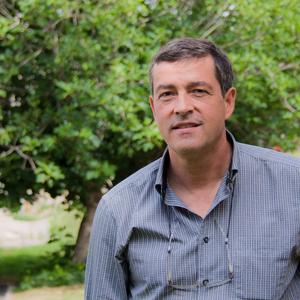
    • Pol Forn-Díaz

      Pol Forn-Díaz

    • Manel Martinez

      Manel Martinez

    Postdoc Researchers

    • Elia Bertoldo

      Elia Bertoldo

    PhD Students

    • Luca Cozzolino

      Luca Cozzolino

    • Guillermo Del Riego

      Guillermo Del Riego

    • Ariadna Gómez del Pulgar

      Ariadna Gómez del Pulgar

    • David López

      David López

    • Alba Torras

      Alba Torras

    Technicians

    • Víctor Manuel Pérez

      Víctor Manuel Pérez

    Internship

    • Elsa Herranz Valiente

      Elsa Herranz Valiente

    • Pau Jiménez Daban

      Pau Jiménez Daban

  • Research Projects

    Quantum Computing Technologies Group

    QCT Lab

    Plan Complementario, 2021

    Comunicación Cuántica

    This program is aligned with the key European initiatives in this area, both the Quantum Flagship and the European Quantum Communications Infrastructure (EuroQCI), by creating cutting-edge infrastructures and acting as a motor for the European quantum industry. IFAE participates in the NESQQ subproject, that will aim at improving qubit quality by intensive fabrication efforts, both studying the addition of novel materials as well as by modifications of the qubit device structure. This project will be run in collaboration with IMB-CNM-CSIC via the researcher Dr. Gemma Rius, an active collaborator of the QCT group

      QCT Lab

      Proyectos I+D Generación de Conocimiento, 2021

      Interacción de la radiación cósmica en cúbits (ICRQ)

      The ICQR project aims to develop superconducting qubits that are resilient against the impact of ionizing radiation, which limit their performance as quantum sensors and hinder the implementation of quantum error correction schemes. This will be achieved by suppressing the generation of spurious quasiparticles in the superconductor through the use of complementary approaches, including operation in a deep underground laboratory, the use of radiopure materials, and on-chip patterns for quasiparticle abatement. Project coordinated by IFAE.

        Avaqus

        H2020-FETOPEN, 2019

        Annealing-based VAriational QUantum processorS (AVaQus)

        AVaQus is a European project funded in the FET-Open 2019 call to develop a quantum processor that demonstrates coherent quantum annealing and its potential to solve real-life optimization problems. Project coordinated by IFAE.

        QUANTERA Logo

        Programa Estatal de I+D+i Orientada a los Retos de la Sociedad, 2019

        Superinductor-based Quantum Technologies with Ultrastrong Couplings (SiUCs)

        SiUCS focus on improving the efficiency of qubit operations involving light-matter interactions. In addition, superinductors are used to engineer a missing device of the superconducting quantum circuit toolbox: the microwave single photon detector.

      • Publications

        Quantum Computing Technologies Group

      • Group News

        Results

        Closing event of the Quantum Communications Complementary Plan

        November 27, 2025

        ICFO hosted the closing event of the Plan Complementario de Comunicaciones Cuánticas, presenting the project’s results and new infrastructure developments in quantum communications.

        Featured in the media

        Pol Forn-Díaz featured in the media

        October 15, 2025

        Pol Forn-Díaz comments on the Nobel Prize in Physics in superconducting circuits, the field his group works in

        New device

        New Dilution Refrigerator Installed at the QCT Lab

        September 26, 2025

        The Quantum Computing Technologies Lab at IFAE has just received its new dilution refrigerator from Leiden Cryogenics. The unit, customized with IFAE’s colors, is currently cooling down and is expected to reach 10 mK (0.01 K above absolute zero) tomorrow.

        New Publication

        New publication in QCT group

        September 4, 2025

        David López, Alba Torras, Elia Bertoldo, Luca Cozzolino, Manel Martinez and Pol Forn are authors of this paper.

        Publication

        New QCT Group Paper on Superinductors and Ultrastrong Coupling

        July 17, 2025

        A new study by the Quantum Computing and Technologies (QCT) group at IFAE reports an advance in superconducting quantum circuits, demonstrating ultrastrong coupling between a flux qubit and a resonator using a superinductor based on granular aluminium. The result, obtained in a device designed, fabricated and characterized locally, stems from fundamental research in circuit quantum electrodynamics and is part of the European Quantera SiUCs project.

        Network

        IFAE joins EU‑selected SUPREME consortium to scale industrial production of superconducting quantum chips

        July 11, 2025

        The Institut de Física d’Altes Energies (IFAE) is one of the 23 partners from eight EU member states in SUPREME, a new European project selected under the Chips Joint Undertaking to establish pilot lines for the industrial production of superconducting quantum chips.