








Event
Next sessions of Radical Science at CCCB
May 9, 2025
IFAEExperts including Didier Queloz, Nathalie Cabrol, Gabriela González, and Eugenio Coccia will explored exoplanets, extraterrestrial life, and gravitational waves.
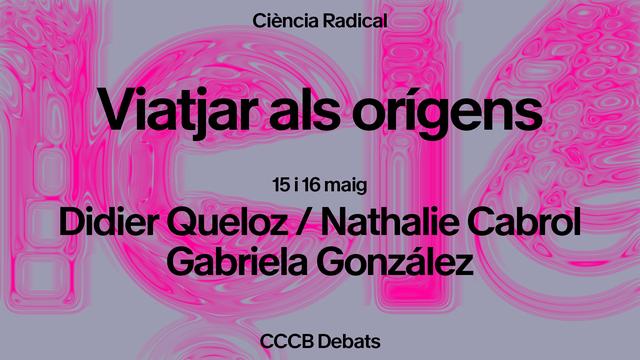
The Centre de Cultura Contemporània de Barcelona (CCCB) is hosting two conferences as part of the Radical Science series, focused on the origins of the universe and life.
On May 15, Nobel Laureate Didier Queloz and astrobiologist Nathalie Cabrol will discuss the possibility of extraterrestrial life, exploring the more than 5,000 exoplanets discovered and the techniques to detect signs of life in their atmospheres.
The following day, on May 16, astrophysicists Gabriela González and Eugenio Coccia will explore how gravitational wave detection opens new avenues for understanding the cosmos, allowing us to study the early universe and phenomena like black hole mergers.
Both sessions are part of the Radical Science program, which kicked off on January 20 with an inaugural session that featured fascinating insights from the directors of various research centers. The program continued with additional sessions on later dates. On June 18, the closing ceremony will be the perfect opportunity to showcase ongoing activities that have emerged as a result of the project.
This cultural initiative is part of the research strategy devised by the Complementary Joint Research Plans fund, coordinated in Catalonia through ICFO, ALBA Synchrotron, IBEC, and IFAE.
Event
IFAE brings physics to CosmoCaixa for the European Researchers’ Night 2026
September 17, 2026
IFAE will bring fundamental physics closer to the public at CosmoCaixa during the European Researchers’ Night 2026, with activities developed within the European Project PICO New Horizons, including an interactive cosmology workshop for families and a live jazz and physics performance.