








Highlight
DESI Completes Planned 3D Map of the Universe and Continues Exploring
April 15, 2026
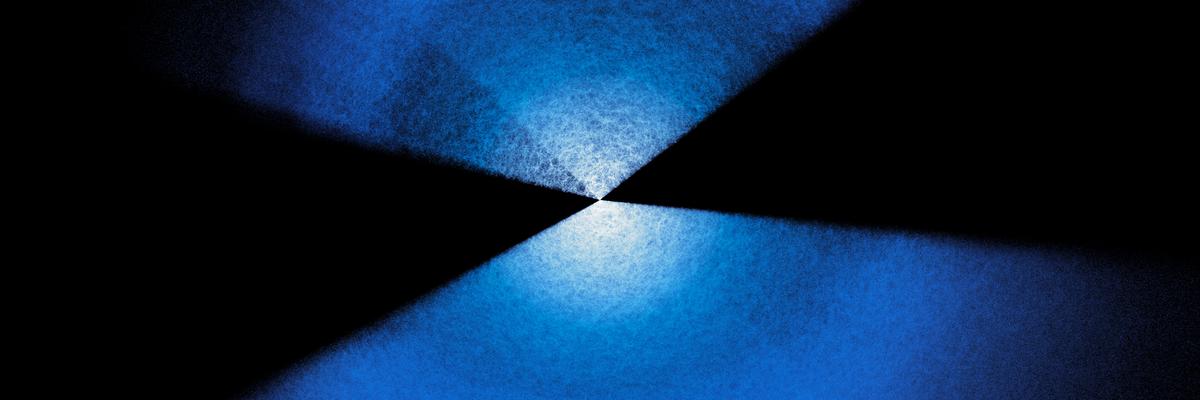
- The Dark Energy Spectroscopic Instrument has completed its originally planned five-year mission and mapped more than 47 million galaxies and quasars, creating the largest high-resolution 3D map of our universe to date.
- Researchers expected to gather data on 34 million galaxies and quasars during the five-year survey, but the instrument performed so efficiently that it captured more than 47 million galaxies and quasars, plus more than 20 million nearby stars used to study the Milky Way.
- Research groups from the Centro de Investigaciones Energéticas, Medioambientales y Tecnológicas (CIEMAT), the Instituto de Ciencias del Cosmos de la Universidad de Barcelona (ICCUB), the Institute of Space Sciences (ICE-CSIC, IEEC), the Institut de Física d’Altes Energies (IFAE), and the Instituto de Física Teórica (IFT, UAM-CSIC) have held significant responsibilities in the scientific analysis of the data.
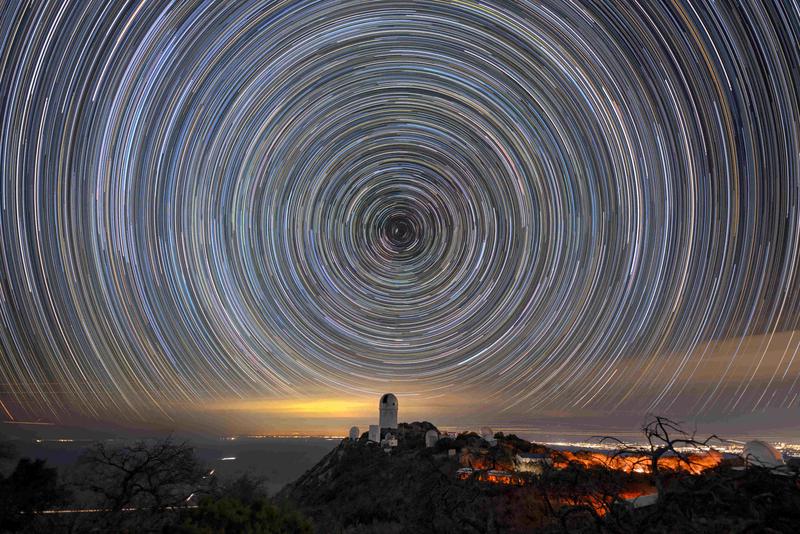
Last night, the 5,000 fiber-optic eyes of the Dark Energy Spectroscopic Instrument (DESI) swiveled onto a patch of sky near the Little Dipper. Roughly every 20 minutes, they locked on to distant pinpricks of light, gathering photons that had traveled toward Earth for billions of years. When the sun rose, collaborators marked completion of a major milestone: successfully surveying all of the area in DESI’s originally planned map of the universe.
The five-year survey, finished ahead of schedule and with vastly more data than expected, has produced the largest high-resolution 3D map of the universe ever made. Researchers use that map to explore dark energy, the fundamental ingredient that makes up about 70% of our universe and is driving its accelerating expansion.
By comparing how galaxies clustered in the past with their distribution today, researchers have traced dark energy’s influence over 11 billion years of cosmic history. Surprising results using DESI’s first three years of data hinted that dark energy, once thought to be a “cosmological constant,” might be evolving over time. With the full set of five years of data, researchers will have significantly more information to test whether that hint disappears or grows. If confirmed, it would mark a major shift in how we think about our universe and its potential fate, which hinges on the balance between matter and dark energy.
DESI’s quest to understand dark energy is a global endeavor. The international experiment brings together the expertise of more than 900 researchers (including 300 PhD students) from over 70 institutions. The project is managed by the Department of Energy’s Lawrence Berkeley National Laboratory (Berkeley Lab), and the instrument was constructed and is operated with funding from the DOE Office of Science. DESI is mounted on the U.S. National Science Foundation’s Nicholas U. Mayall 4-meter Telescope at Kitt Peak National Observatory (a program of NSF NOIRLab) in Arizona.
“DESI’s five-year survey has been spectacularly successful,” said Michael Levi, DESI director and a scientist at Berkeley Lab. “The instrument performed better than anticipated. The results have been incredibly exciting. And the size and scope of the map and how quickly we’ve been able to execute is phenomenal. We’re going to celebrate completion of the original survey and then get started on the work of churning through the data, because we’re all curious about what new surprises are waiting for us.”
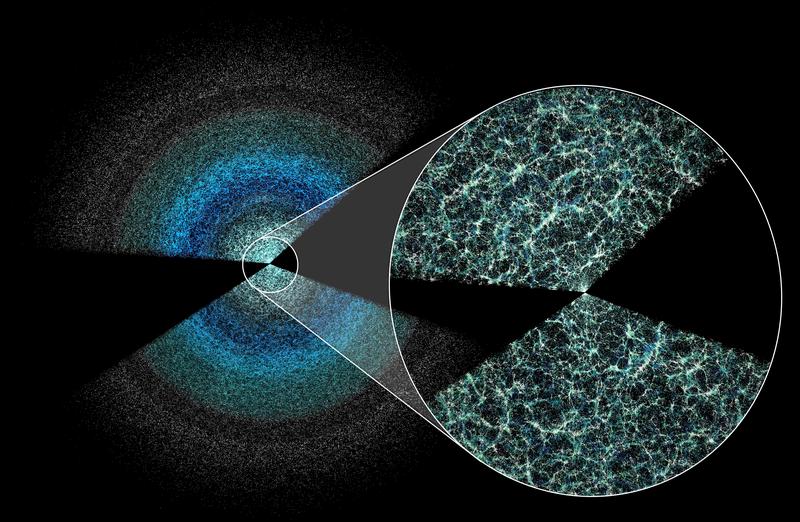
DESI has now measured cosmological data for six times as many galaxies and quasars as all previous measurements combined. The collaboration will immediately begin processing the completed dataset, with the first dark energy results from DESI’s full five-year survey expected in 2027. In the meantime, DESI scientists continue to analyze the survey’s first three years of data, refining dark energy measurements and producing additional results on the structure and evolution of the universe, with several papers planned later this year.
An observing machine
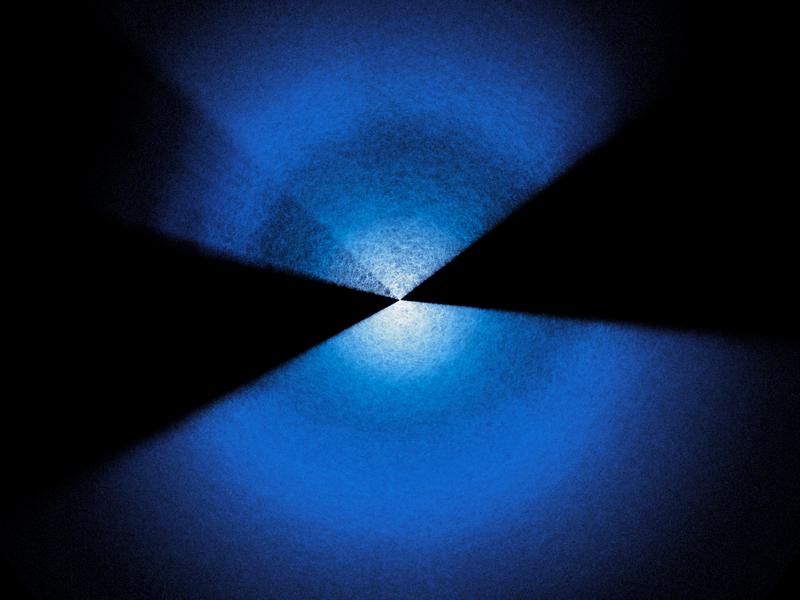
DESI began collecting data in May 2021. Since then, the instrument has far surpassed the collaboration’s original goals. The plan was to capture light from 34 million galaxies and quasars (extremely distant yet bright objects with black holes at their cores) over the five-year sky survey. DESI instead observed more than 47 million galaxies and quasars and 20 million stars.
The project’s success is even more impressive in light of several challenges. DESI is a complicated machine with thousands of parts to maintain. In 2020, final tests of the instrument were interrupted by the COVID-19 pandemic. In 2022, the Contreras Fire swept over Kitt Peak but, through the efforts of firefighters and staff, did not damage the telescope. Recovery efforts were slowed by monsoons and mudslides.
“DESI is a complicated but wonderfully robust system, and it’s been a huge amount of fun to see it come together and work so well for such a long time,” said Connie Rockosi, co-instrument scientist for DESI and a professor at UC Santa Cruz and UC Observatories. “We’ve learned about the instrument over five years, and we know its personality and behavior pretty well. That’s important because having the instrument be so efficient is why we’re here at the end of DESI’s original survey with such great data and so much science coming out.”
To map objects, researchers use specially-designed software to optimize DESI observations and decide where to point the telescope. Robotic positioners precisely line up optical fibers that are accurate to within 10 microns, or less than the width of a hair. Ten spectrographs then measure and split the light into its separate colors to determine each object’s position, velocity, and chemical composition.
Collaborators across the project found ways to make DESI more efficient. Efforts spanned telescope operations, tweaks to the instrument hardware, updates to software, observing protocols, methods to reduce the data, and more.
“There’s been constant monitoring and intervention to make the whole thing tick,” said Adam Myers, co-manager for DESI’s survey operations and professor at the University of Wyoming. “And the DESI team is remarkable. This huge group of people have all been working on whether they could save one or two or three percent in their particular area, and when you add it all up, it results in these amazing gains in efficiency.”
DESI is designed to make several overlapping passes of the sky to observe its full footprint (and sometimes make repeated observations of faint objects). The survey was so efficient, the team completed an entire additional pass over the sky for the “Bright-Time Survey,” which is carried out when reflected light from the moon hinders observations of faint and distant objects. All told, DESI made five passes during the Bright-Time Survey and seven during the Dark-Time Survey, covering about two-thirds of the northern night sky.
The sky’s the limit
DESI will continue observations through 2028 and grow its map by about 20%, from 14,000 square degrees to 17,000 square degrees. (For comparison, the moon covers approximately 0.2 square degrees, and the full sky has over 41,000 square degrees). The extended map will cover parts of the sky that are more challenging to observe: areas that are closer to the plane of the Milky Way, where bright nearby stars can make it harder to see more distant objects, or further to the south, where the telescope must account for peering through more of Earth’s atmosphere.
The experiment will also revisit the existing area of the map to collect data from a new set of galaxies: more distant and faint “luminous red galaxies.” These will provide an even denser and more detailed map in the regions DESI has already covered, giving researchers a clearer picture of the universe’s history.
Researchers will also study nearby dwarf galaxies and stellar streams, bands of stars torn from smaller galaxies by the Milky Way’s gravity. The hope is to better understand dark matter, the invisible form of matter that accounts for most of the mass in the universe but has never been directly detected.
The extended map is already underway. When it became clear that DESI would operate beyond its original survey plan, researchers began interleaving the new observations with the ongoing DESI survey to optimize the use of telescope time and keep the instrument from sitting idle.
“We’ve built a remarkable piece of equipment that met all our expectations and then some,” Levi said. “Now we’re pushing beyond our original plan. We don’t know what we’ll find, but we think it’ll be pretty exciting.”
The Dark Energy Spectroscopic Instrument collaboration
DESI is supported by the DOE Office of Science and by the National Energy Research Scientific Computing Center, a DOE Office of Science national user facility. Additional support for DESI is provided by the U.S. National Science Foundation; the Science and Technology Facilities Council of the United Kingdom; the Gordon and Betty Moore Foundation; the Heising-Simons Foundation; the French Alternative Energies and Atomic Energy Commission (CEA); the Secretariat of Science, Humanities, Technology and Innovation (SECIHTI) of Mexico; the Ministry of Science and Innovation of Spain; and by the DESI member institutions.
The DESI collaboration is honored to be permitted to conduct scientific research on I’oligam Du’ag (Kitt Peak), a mountain with particular significance to the Tohono O’odham Nation.
- Additional Material
- LBL News
- IFAE Research group
- Observational Cosmology Group
- Contact