








Highlight
Two large instrumented baffles installed in Virgo
June 19, 2026
- Two large instrumented baffles designed and built by IFAE have been installed in Virgo’s input mirror towers ahead of the next LIGO–Virgo–KAGRA observing run.
- Equipped with 120 sensors each, the new systems enable continuous monitoring of stray-light-induced noise and provide new capabilities for detector characterization, cavity pre-alignment and performance monitoring.
- The project, led by Mario Martínez and carried out by the IFAE Gravitational Waves group and Technical Division, represents the culmination of more than seven years of development and an important contribution to the ongoing upgrade of the Virgo detector.
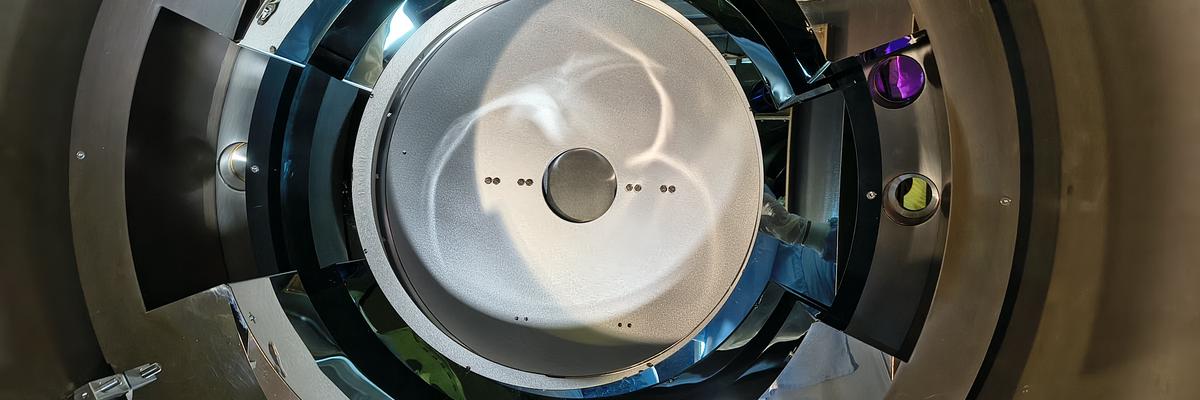
Two large instrumented baffles designed and built by researchers and engineers from IFAE have been successfully installed in the arms of the Virgo detector. The installation marks an important milestone in the ongoing upgrade of the observatory ahead of the next observing run of the LIGO–Virgo–KAGRA network and represents the culmination of more than seven years of development work led by the IFAE gravitational-wave group under the coordination of Mario Martínez.
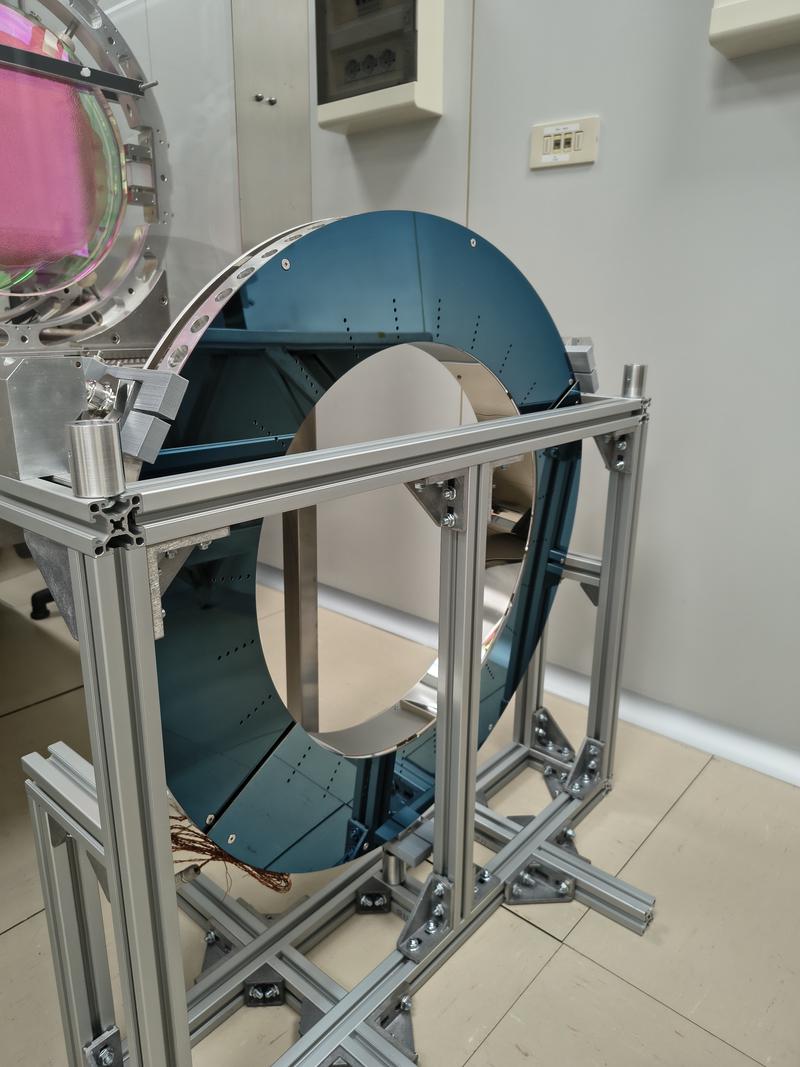
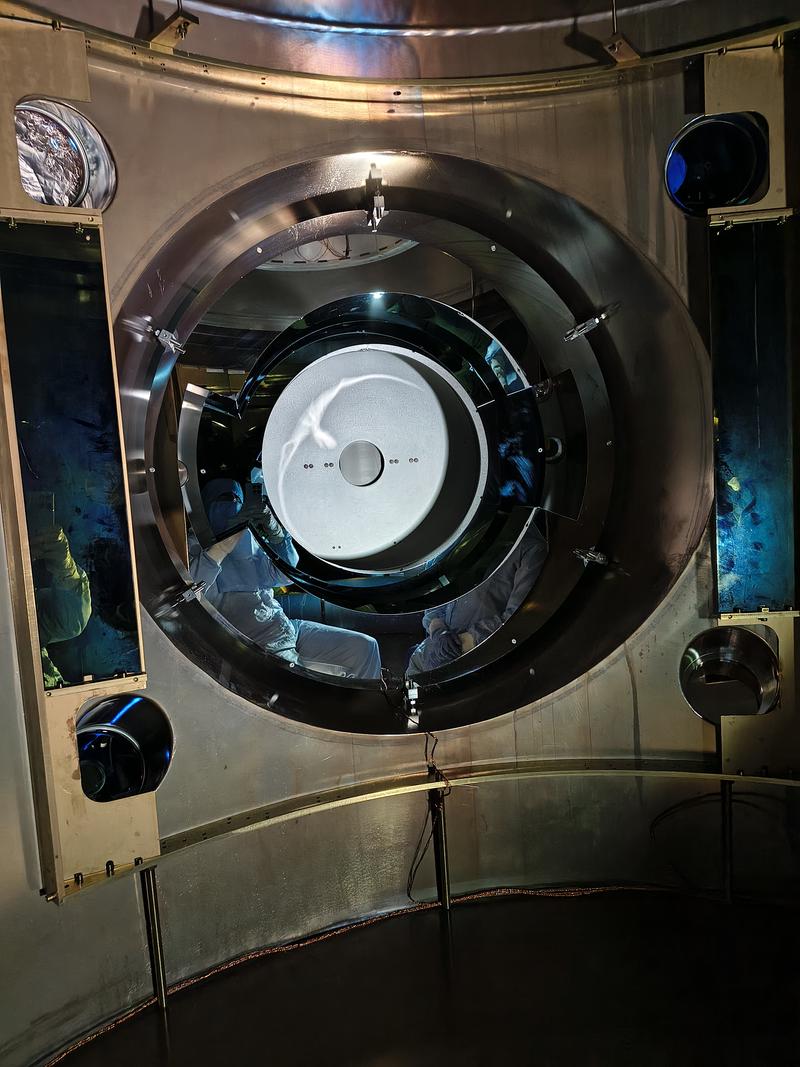
The new devices are installed inside Virgo’s input mirror towers, with one baffle deployed in each tower. Both systems have now completed installation and validation activities, and the first dedicated in-situ mechanical vibration measurements have already been performed. These measurements will play a key role in characterizing sources of stray-light noise and improving the understanding of detector performance.
A new diagnostic system for Virgo
Understanding and mitigating stray-light noise remains an important aspect of detector characterization in Virgo. The newly installed instrumented baffles provide a dedicated system for monitoring scattered light inside the interferometer and studying its impact on detector performance. More broadly, they introduce a new instrument for detector characterization within Virgo, extending the collaboration’s ability to monitor and understand sources of noise that affect detector sensitivity.
Each baffle incorporates 120 sensors distributed across five concentric rings readout at 1kHz rate, providing detailed information on the behaviour of scattered light and its interaction with the detector environment. In addition to monitoring scattered light, the system provides information that can be used for cavity pre-alignment, detector diagnostics and performance monitoring during operation.
The installation builds on previous work carried out by the team, including the successful deployment of the first instrumented baffle in Virgo’s Input Mode Cleaner in 2021. The new installations bring this technology into the main interferometer infrastructure, significantly extending its monitoring capabilities.
A collaborative effort
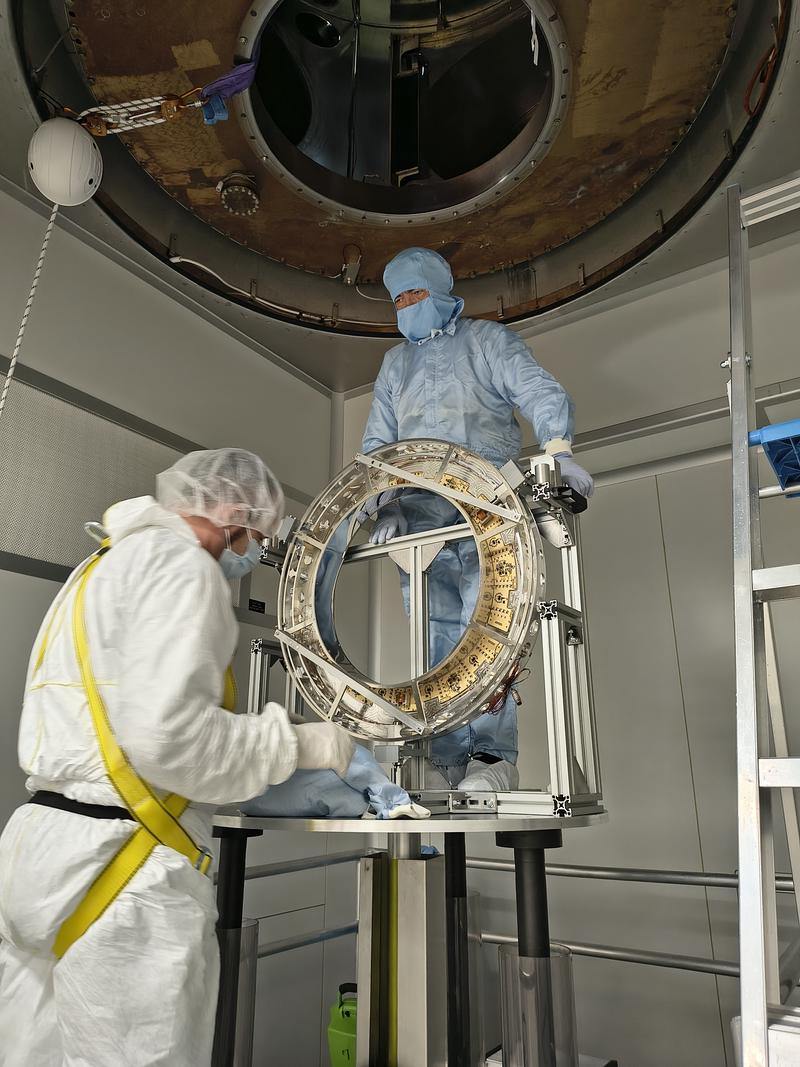
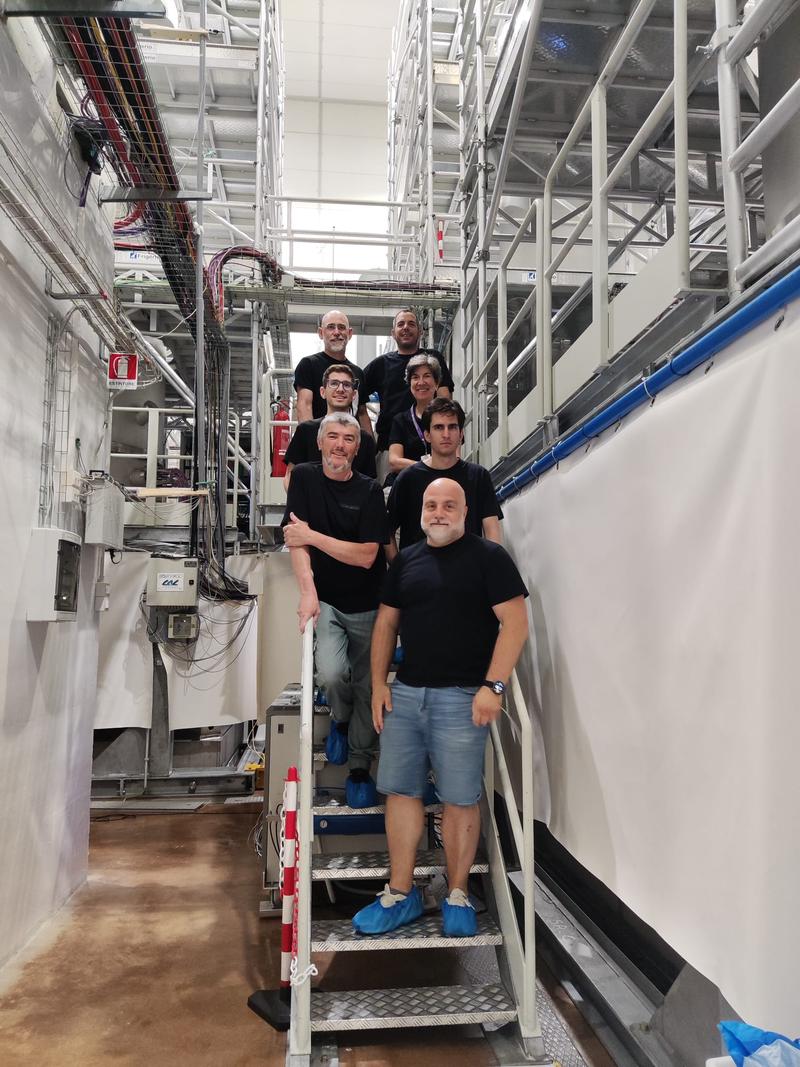
The installation campaign was carried out by members of the IFAE Gravitational Wave group and Technical Division, including Lluïsa-Maria Mir, Otger Ballester, José Illa, Noel Delgado, David Roman, and Alex Carmona. The team also received on-site integration and commissioning support from José Ferrer, an experienced technician from the ALBA Synchroton in Barcelona. EGO assisted the IFAE team during the different stages of the intervention in the towers. The successful deployment of the two baffles reflects the coordinated effort required to develop and integrate new instrumentation into a large-scale gravitational-wave observatory.
Supporting future observing runs
Beyond monitoring scattered light, the instrumented baffles provide several new capabilities for detector characterization and operation. They can be used during the pre-alignment of optical cavities, enable continuous monitoring of stray-light-induced noise, and provide in-situ information on the behaviour of the main mirrors and their surrounding environment.
The instrumented baffles will form part of the regular Virgo operations. By combining information from the baffles with other auxiliary channels, the collaboration will be able to better identify and understand sources of transient noise and detector glitches. This includes effects associated with scattered light, environmental disturbances, dust interactions, mirror motion and other processes that can influence interferometer performance.
These new diagnostic capabilities will contribute to a more detailed understanding of detector behaviour and support future improvements in Virgo’s sensitivity to gravitational waves.
- IFAE Research group
- Gravitational Waves Group
- Contact