








New facility
New Thermal Vacuum Chamber inaugurated at IFAE
June 23, 2026
IFAEA new Thermal Vacuum Chamber (TVAC) has been inaugurated at the Institut de Física d’Altes Energies (IFAE) on the campus of the Universitat Autònoma de Barcelona (UAB). The facility will enable satellites and space technologies to be tested under conditions representative of Earth’s orbit, expanding the capabilities available to the research and space technology communities. The TVAC is a joint project of the Institute of Space Studies of Catalonia (IEEC) and IFAE, made possible through funding from the CERCA Ginys III programme, together with additional support from the Government of Catalonia, the IEEC and IFAE.
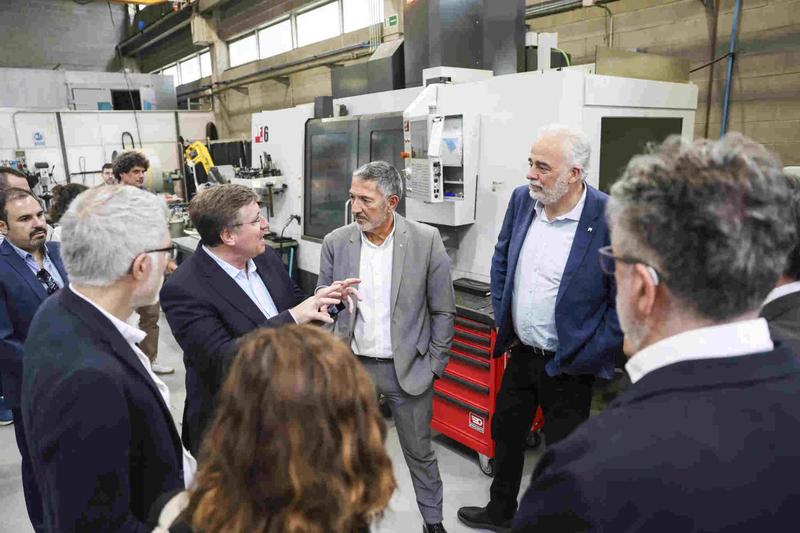
The inauguration ceremony took place on 23 June 2026 at IFAE in the presence of Miquel Sàmper, Minister of Business and Labour of the Government of Catalonia. The event was attended by Javier Lafuente, Rector of the Universitat Autònoma de Barcelona (UAB); Teresa Sanchis, Director General for Research; Xavier Luri, Director of the IEEC; Eugenio Coccia, Director of IFAE; together with representatives from the Catalan research and space sectors.
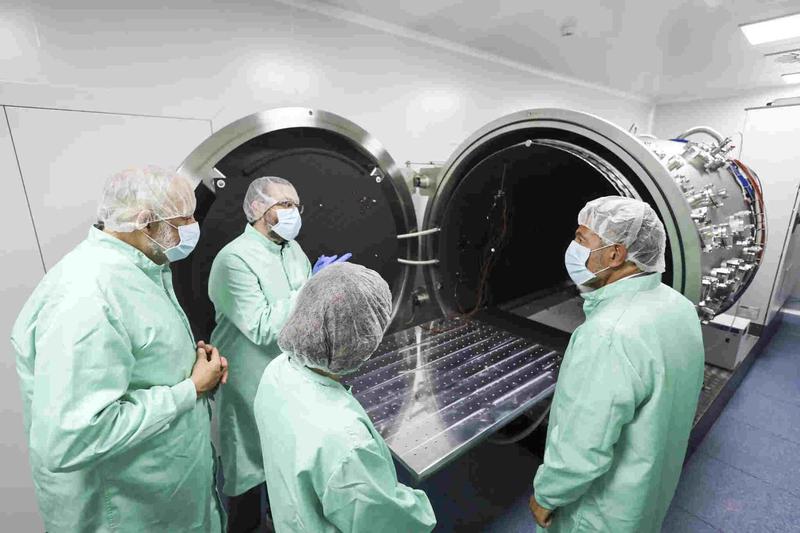
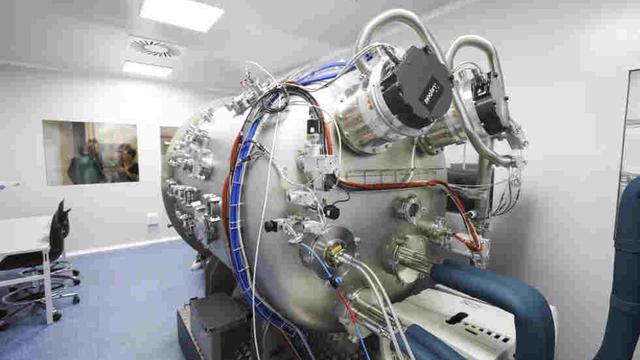
Located in the IFAE Technical Division facilities, the TVAC reproduces the vacuum and thermal conditions encountered in low-Earth orbit, allowing satellites, subsystems and scientific instruments weighing up to 100 kg to be tested before launch. By providing these capabilities locally, the facility will reduce the need for environmental testing abroad and support the development of future space missions by research institutions and companies.
The chamber combines high-vacuum operation with controlled thermal cycling to reproduce the thermal-vacuum environment encountered in low-Earth orbit (this is some repetition?) It can achieve a residual pressure of 10⁻⁶ mbar in less than five hours and perform temperature cycles between −80 °C and +100 °C, replicating the thermal variations experienced by satellites as they transition between eclipse and direct solar illumination. The facility also complies with stringent ESA and NASA cleanliness requirements through integrated contamination monitoring systems and a dedicated cold plate that traps airborne contaminants.
Hosting the TVAC reinforces IFAE’s role in the development of advanced instrumentation for space science and technology. The institute has provided the specialised infrastructure and technical environment required for the installation of the facility, while collaborating with the IEEC to make this new capability available to the scientific and industrial communities. From the IFAE side, the project was led by Cristóbal Padilla, with Laia Cardiel contributing to the development and commissioning of the facility.
The new facility is expected to strengthen collaboration between research institutions and the NewSpace industry, accelerating the development and qualification of future space technologies.
Event
IFAE brings physics to CosmoCaixa for the European Researchers’ Night 2026
September 17, 2026
IFAE will bring fundamental physics closer to the public at CosmoCaixa during the European Researchers’ Night 2026, with activities developed within the European Project PICO New Horizons, including an interactive cosmology workshop for families and a live jazz and physics performance.
Activity
IFAE launches ‘Ask the Universe’ for the European Researchers’ Night
September 16, 2026
IFAE launches Ask the Universe (Pregunta a l’Univers), a new educational outreach initiative inviting young people to share the questions about the Universe that most intrigue them. The activity is part of IFAE’s programme for the European Researchers’ Night 2026 and has been developed within the European project PICO New Horizons.