








Highlight
Action! NSF–DOE Vera C. Rubin Observatory Begins the Greatest Cosmic Movie Ever Made
June 30, 2026
- The wait is over: NSF–DOE Vera C. Rubin Observatory has begun observing the cosmos in unprecedented detail, transforming the way we study the dynamic Universe.
- The Legacy Survey of Space and Time (LSST), the observatory’s ten-year observing programme, has officially begun, marking the start of a new era for astronomy and astrophysics.
- In Spain, the project brings together the Centro de Investigaciones Energéticas, Medioambientales y Tecnológicas (CIEMAT), the Institut de Física d’Altes Energies (IFAE), the Instituto de Astrofísica de Canarias (IAC), the Institute of Space Sciences (ICE-CSIC), the Instituto de Física Teórica (IFT-UAM/CSIC), and the Port d’Informació Científica (PIC), all of which play a key role in the scientific, technological and computing development of the Legacy Survey of Space and Time (LSST).
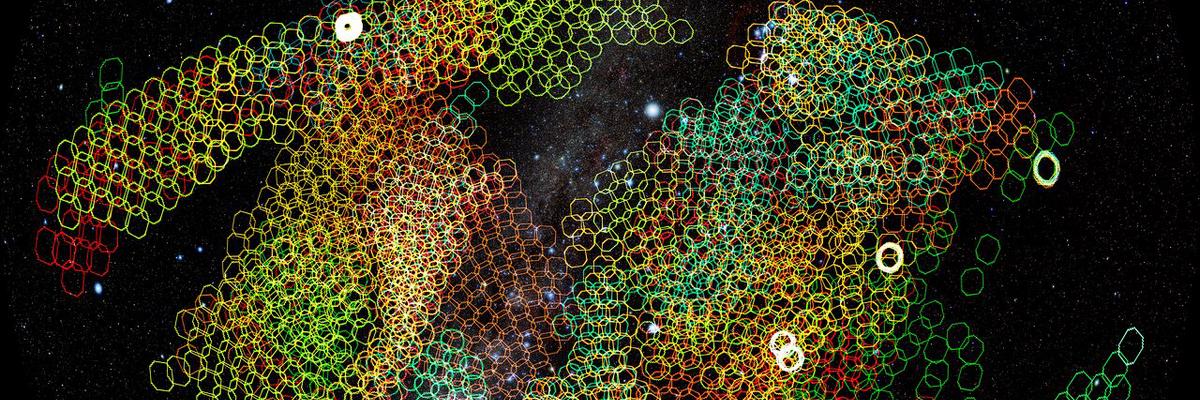
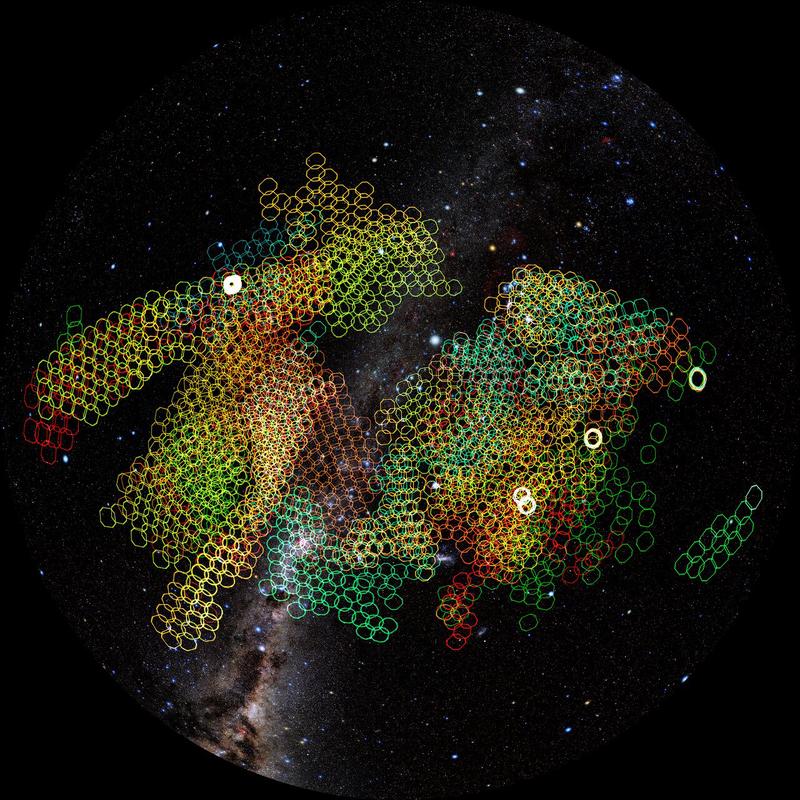
From a mountaintop in Chile beneath dark, clear skies, NSF–DOE Vera C. Rubin Observatory has begun the Legacy Survey of Space and Time (LSST). This ten-year sky survey will create the most complete and detailed record of the Universe ever assembled.
Over the next decade, Rubin will repeatedly map the southern sky to build the most complete and detailed record of the Universe ever created. The beginning of this programme marks the culmination of years of work by thousands of people around the world. It follows the release of the observatory’s first images during the Rubin First Look event in June 2025, the completion of the final commissioning phase, the operational readiness review, and the activation of the alert production system.
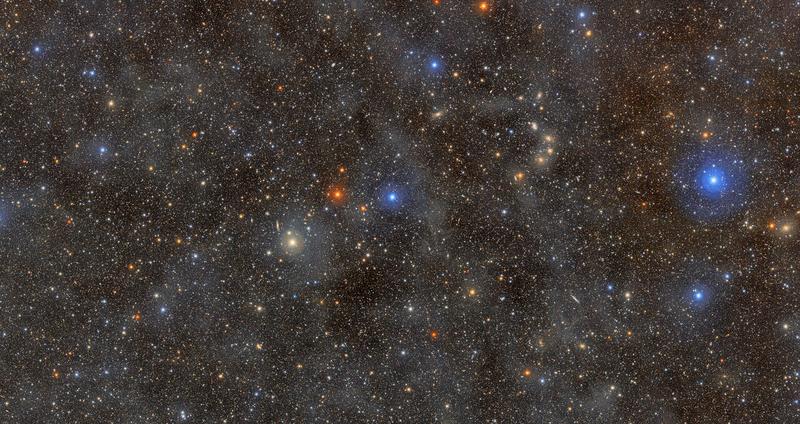
Spanish institutions play a key role across different areas of the LSST project. CIEMAT has contributed to the scientific commissioning of the observatory, validating the telescope’s performance and data quality ahead of the start of operations, and participates in scientific analysis through the Dark Energy Science Collaboration (DESC). ICE-CSIC contributes to the scientific exploitation of LSST data and to the study of transient phenomena. IFAE has contributed to the development of the telescope control and monitoring software and is an active member of DESC, which prepares the cosmological exploitation of LSST data. IFT-UAM/CSIC contributes to the scientific analysis of the data to study the nature of dark matter and dark energy. PIC, jointly operated by IFAE and CIEMAT, is developing an Independent Data Access Center (IDAC) based on CosmoHub to facilitate access to and analysis of Rubin Observatory data.
“It’s exciting and humbling to be here at this moment, beginning the Legacy Survey of Space and Time after more than two decades of extraordinary work by our team,” said Bob Blum, Director of Rubin Observatory at NSF NOIRLab. “Rubin Observatory is for everyone; LSST will change the way we do astronomy and astrophysics, enabling researchers around the world to participate in cutting-edge science.”
Ramon Miquel, researcher at IFAE, highlights: “LSST can be seen as the natural continuation of the Dark Energy Survey (DES), in which Spanish groups have participated over the past 20 years and which is now publishing its final results. However, the LSST survey will be much faster, wider and deeper. After ten years of observations, it will have produced high-precision images of several billion galaxies, compared with the few hundred million reached by DES. This will represent a genuine revolution for observational cosmology.”
“We are excited, and even a little overwhelmed,” says Nacho Sevilla, researcher at CIEMAT and member of the DESC collaboration for the project’s cosmology programme. “With LSST we are embarking on a completely new way of exploring the Universe on an unprecedented scale. It will deliver an unparalleled stream of data in real time, reaching depths and sky coverage never achieved before. I am truly excited about the discoveries that await us over the coming years. Spain has also played an important role thanks to the contributions of its companies and scientific institutions.”
Lluís Galbany, researcher at ICE-CSIC and IEEC, explains: “The start of LSST operations marks a turning point for observational astronomy. Over the next decade, LSST will discover millions of variable and transient objects, providing an unprecedented view of the dynamic Universe. At ICE-CSIC we contribute to this international project through scientific and technological developments provided as in-kind contributions, and we will play a leading role in the study of stellar explosions and other transient phenomena, complementing LSST discoveries with follow-up observations from the Gran Telescopio Canarias.”
Rubin Observatory combines exceptional light-gathering power, a wide field of view and the ability to rapidly observe different regions of the sky. Its 3.2-gigapixel camera — the largest digital camera ever built — records a new image approximately every 40 seconds. This unique combination of speed and sensitivity allows Rubin to detect extremely faint objects and transient phenomena with remarkable reliability, night after night. The status of the LSST can be followed in real time on the Rubin Observatory website (https://rubinobservatory.org/) .
Rubin will allow us to observe the Universe as never before, revealing pulsating stars, exploding supernovae, the fossil record of galaxies, new clues about dark matter and dark energy, and even phenomena that are still completely unknown. Some cosmic processes unfold slowly, unpredictably or are extremely rare, making a decade-long observing programme essential. By observing every point in the sky around 800 times over ten years, Rubin’s data will provide an unprecedented view of the Universe, enabling scientists to discover subtle phenomena, track moving objects and study the accelerated expansion of the Universe.
In addition, Rubin will become the most powerful tool ever built for discovering new objects in the Solar System. By recording around one thousand images every night, the observatory will produce a detailed census of millions of asteroids and comets. In just a month and a half of commissioning observations, Rubin discovered more than 11,000 previously unknown asteroids, including 33 near-Earth objects and 380 trans-Neptunian objects [1].
The observatory will also advance multi-messenger astronomy, which studies cosmic phenomena through different signals, including light, gravitational waves and cosmic rays. Rubin’s rapid multicolour observations of transient events — such as stellar explosions, actively accreting black holes and collisions between compact objects — will enable observatories around the world to carry out follow-up observations of these short-lived events.
Each night, Rubin will generate around 10 terabytes of data and up to 7 million alerts about changes in the night sky. These alerts will be sent to automated systems known as alert brokers, which classify them so that the scientific community can respond rapidly.
By the end of the LSST, the final dataset will contain billions of astronomical objects and trillions of measurements, all made available through regular data releases. Never before will such a vast quantity of astronomical data have been accessible to so many people, opening the door to new kinds of discovery by both the scientific community and the public. Rubin invites anyone in the world to use its data and explore the dynamic Universe in ways never before possible.
Rubin Observatory is a scientific facility of the U.S. Government, funded by the U.S. National Science Foundation (NSF) and the U.S. Department of Energy’s Office of Science (DOE). The observatory is jointly operated by NSF NOIRLab and the SLAC National Accelerator Laboratory, while NSF NOIRLab is managed by the Association of Universities for Research in Astronomy (AURA).
- Additional Material
- Rubin Observatory Press Release
- IFAE Research group
- Observational Cosmology Group
- Contact