







Highlight
IFAE celebrates 35 years of research, collaboration and scientific ambition
September 29, 2026
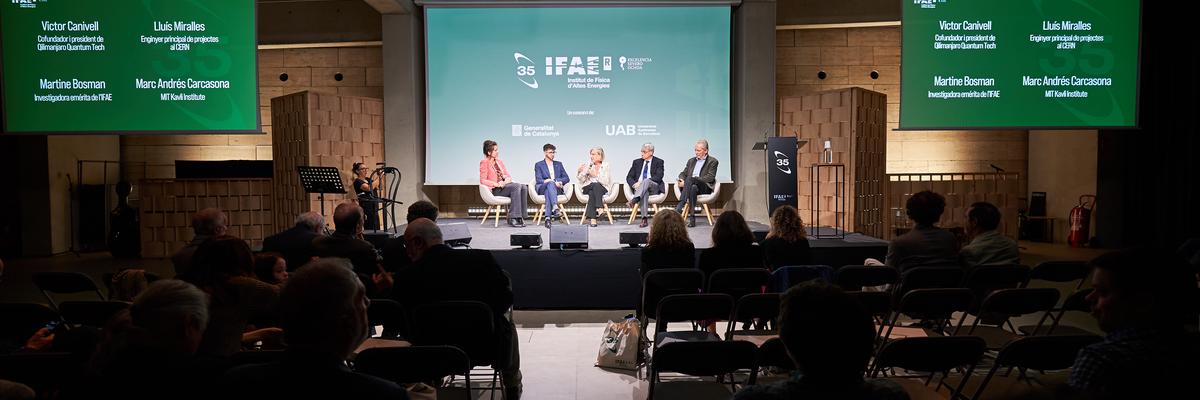
The Institut de Física d’Altes Energies (IFAE) celebrated its 35th anniversary on 26 October 2026 at the Centre de Cultura Contemporània de Barcelona (CCCB). The event brought together current and former members of the institute, collaborators and institutional representatives for an afternoon connecting IFAE’s beginnings with the questions and projects driving its future.
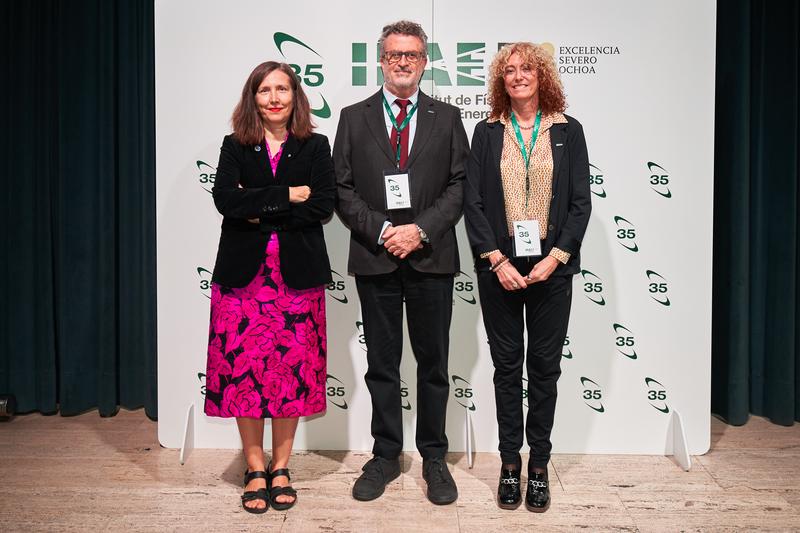
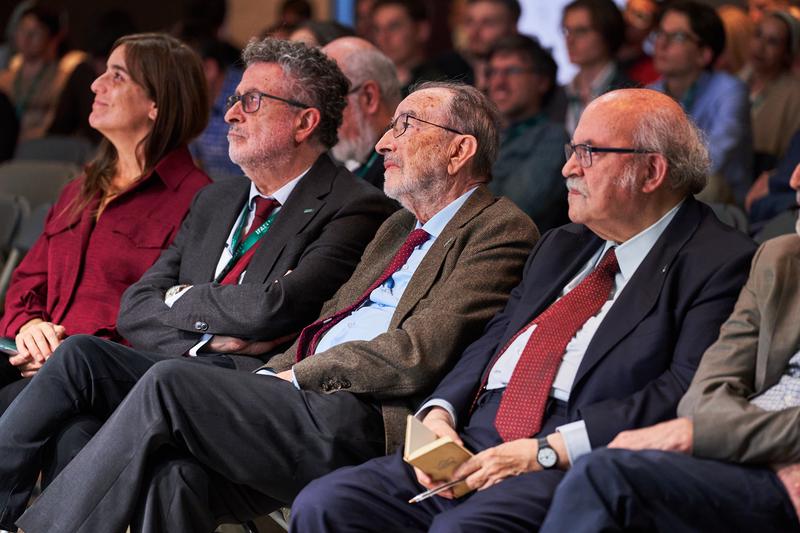
Participants included Núria Montserrat Pulido, Minister of Research and Universities of the Government of Catalonia; Rosa María Sebastián Pérez, UAB Vice-Rector for Innovation, Knowledge Transfer and Entrepreneurship, representing the rector; Teresa Sanchis, Director General for Research; Laia Pellejà, Director of the Institució CERCA; Andreu Mas-Colell, President of BIST; Eduard Vallory, Director of BIST; and Ramon Pascual, former UAB rector and a driving force behind IFAE’s creation. They joined IFAE Director Eugenio Coccia and Director-designate Mario Martínez Pérez, alongside former directors and representatives of partner research institutions.
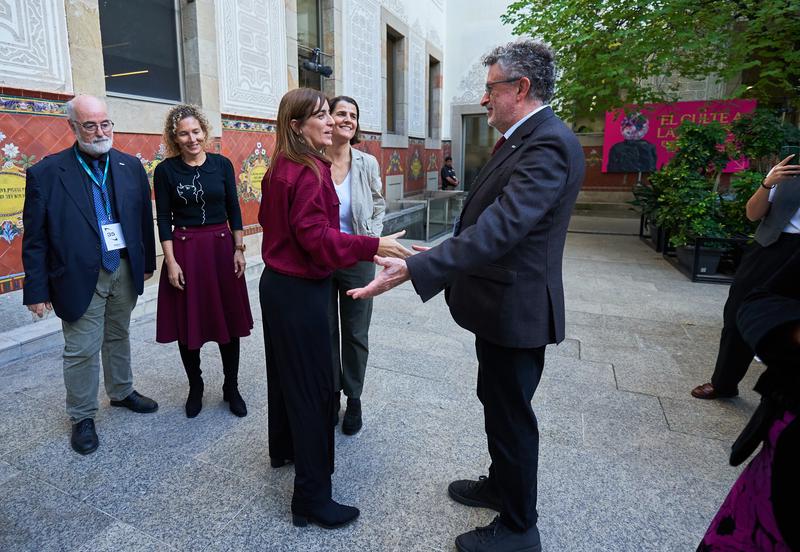
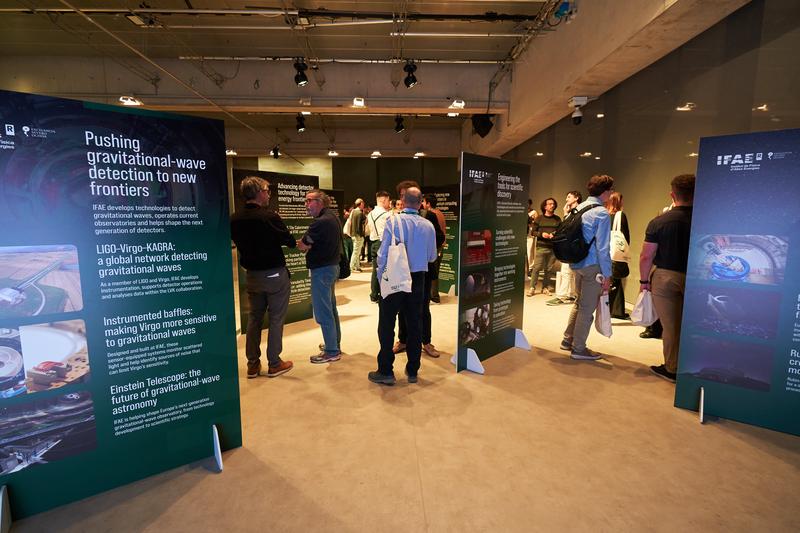
The event was hosted by Marta Pulido, who guided the audience through the afternoon’s presentations and conversations.
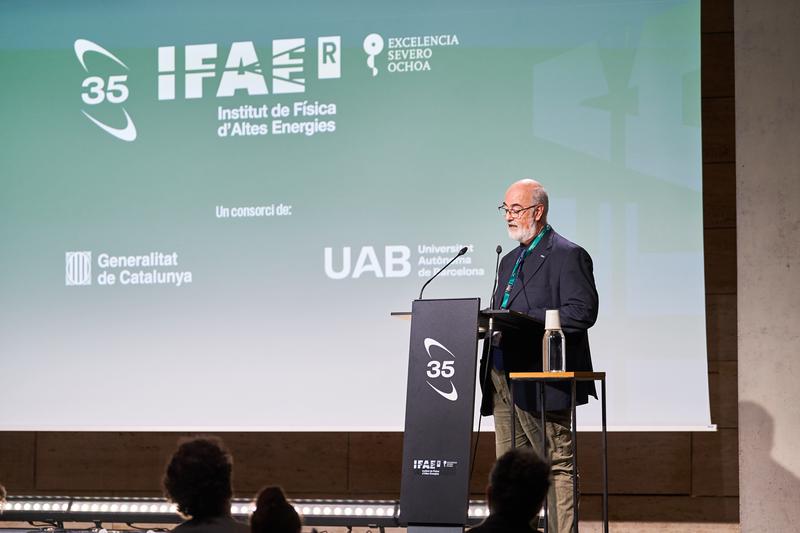
In his opening address, IFAE Director Eugenio Coccia described the institute through three values—passion, collaboration and responsibility—and reflected on the collective effort behind his four years as director. “What really defines the institute is its people: their talent, their dedication and their ability to work together, day after day,” he said.
Núria Montserrat Pulido, Minister of Research and Universities of the Government of Catalonia, highlighted IFAE’s role in making Catalonia an active contributor to international science. She called for sustained support for fundamental research to expand the possibilities available to future generations: “We cannot predict the future of science, but we can decide what role we want to play in building it.”
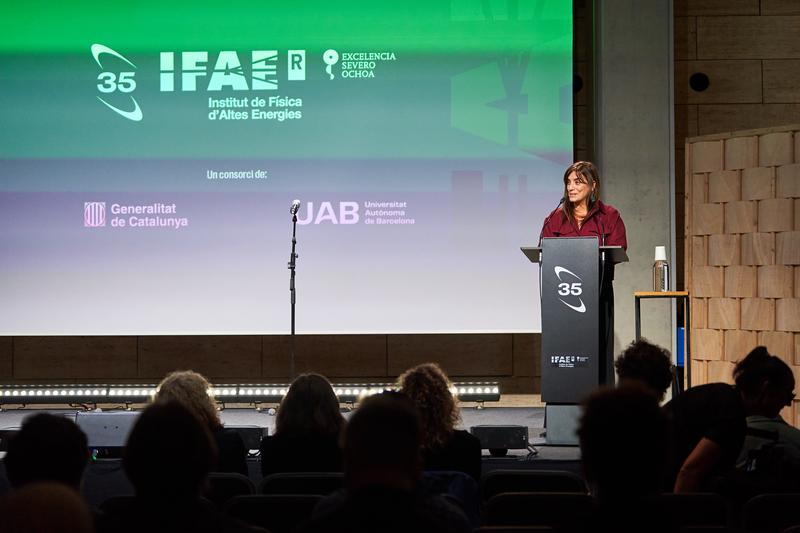
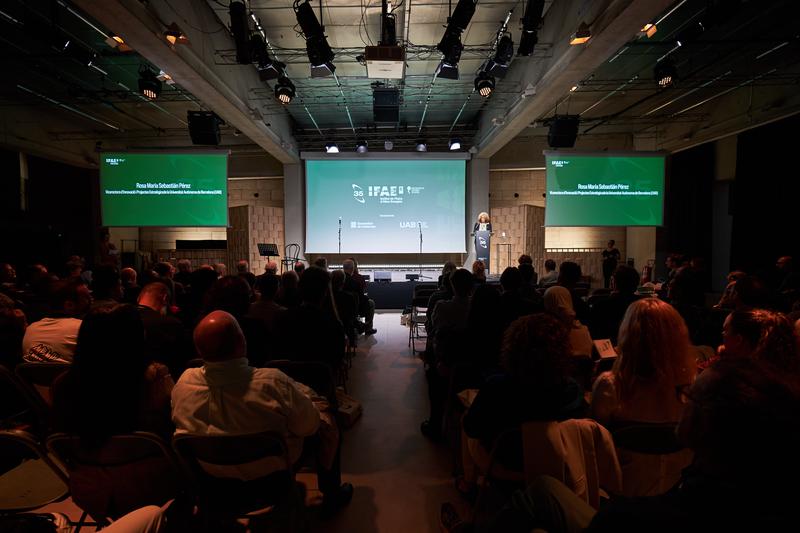
Rosa María Sebastián Pérez, Vice-Rector for Innovation, Knowledge Transfer and Entrepreneurship at the Universitat Autònoma de Barcelona (UAB), highlighted the institute’s university roots and their continuing partnership in research, training and technology transfer. “We celebrate the achievements of an institution we helped create, which has its roots in our university and with which we continue to share people, training, spaces and projects,” she said. She also reaffirmed the UAB’s commitment to supporting IFAE’s future, including its work on the Einstein Telescope.
Images for the future
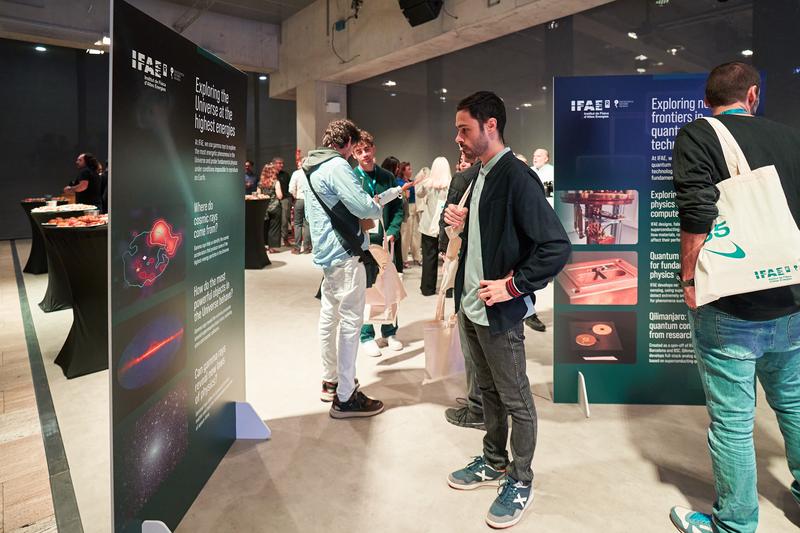
Under the title “Images for the future”, members of IFAE’s research groups, Technical Division and Port d’Informació Científica (PIC) presented the institute’s work through a series of images and short interventions. Together, they offered a view of the scientific questions, instruments and collaborations that connect IFAE’s different areas of activity.
From studying fundamental particles to investigating the evolution of the Universe, the presentations illustrated the relationship between scientific ambition and the technologies needed to pursue it. They also explored how expertise developed in fundamental research opens possibilities in areas such as medical applications and quantum technologies.
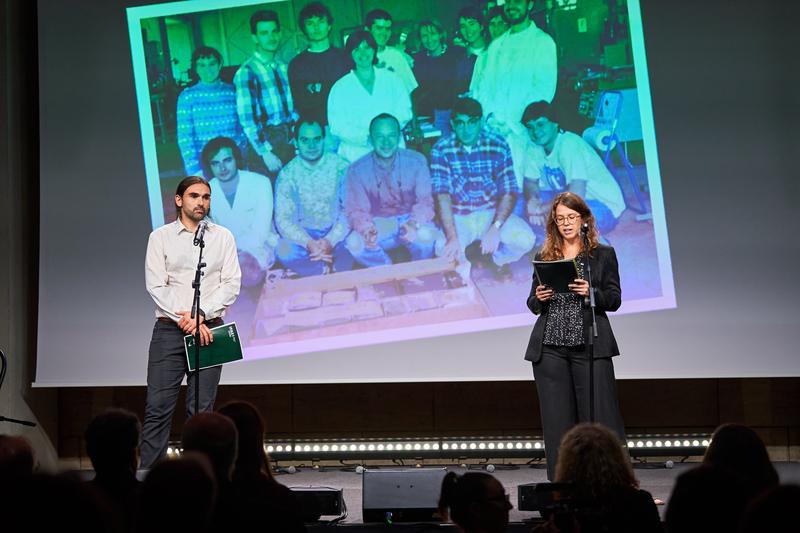
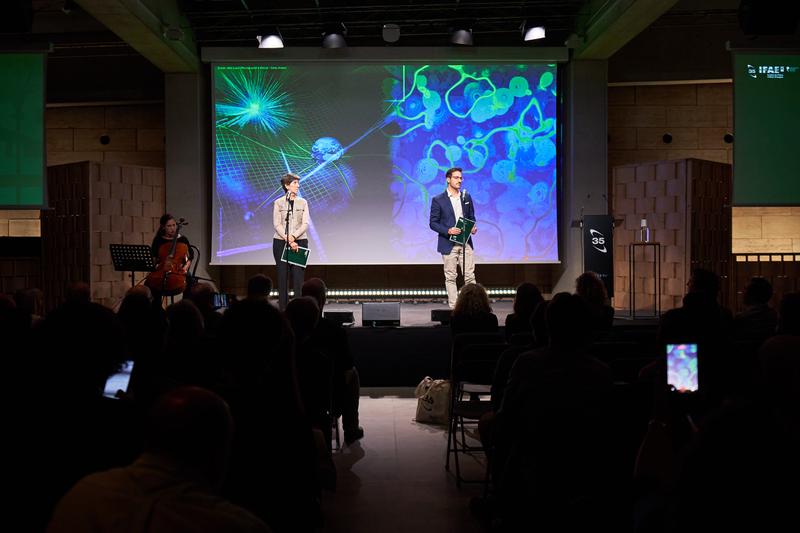
Contributors included Diego Blas, Pol Forn-Díaz, Javier Rico, Andreu Font-Ribera, Tamara Vázquez Schröder, Gerard Ariño, Elsa Barreras, Christian Neissner, Thorsten Lux, Fabrizio Rompineve and Lluïsa-Maria Mir Martínez.
Musical interludes by cellist Maria Coll accompanied the presentations.
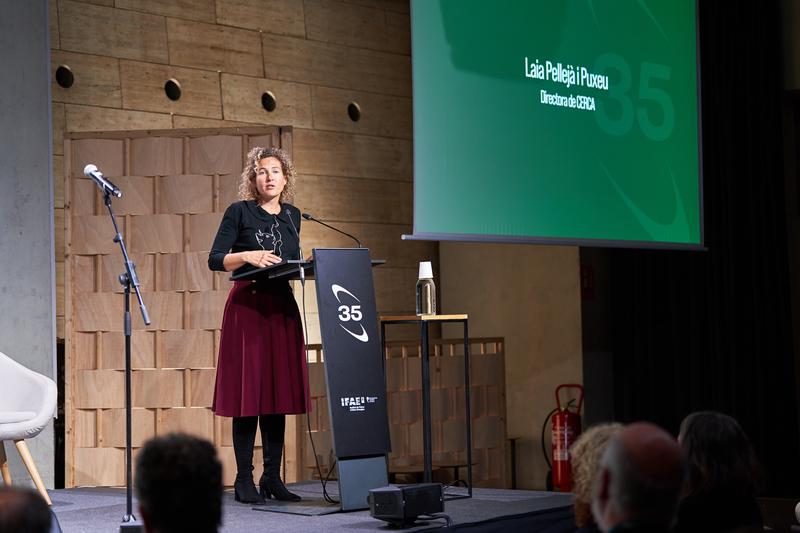
Laia Pellejà, Director of the Institució CERCA, highlighted four ways IFAE contributes to Catalonia: attracting talent, turning research into economic activity through spin-offs, sharing technical infrastructure with the wider research community, and inspiring future generations through education and outreach. She also encouraged greater collaboration across disciplines.
The impact of IFAE through its people
A round table explored IFAE’s impact through the experiences of people who have been part of its history. It brought together Víctor Canivell, co-founder and chairman of Qilimanjaro Quantum Tech; Lluís Miralles, Principal Project Engineer at CERN; Marc Andrés Carcasona, researcher at the MIT Kavli Institute; and Martine Bosman, IFAE emeritus research professor.
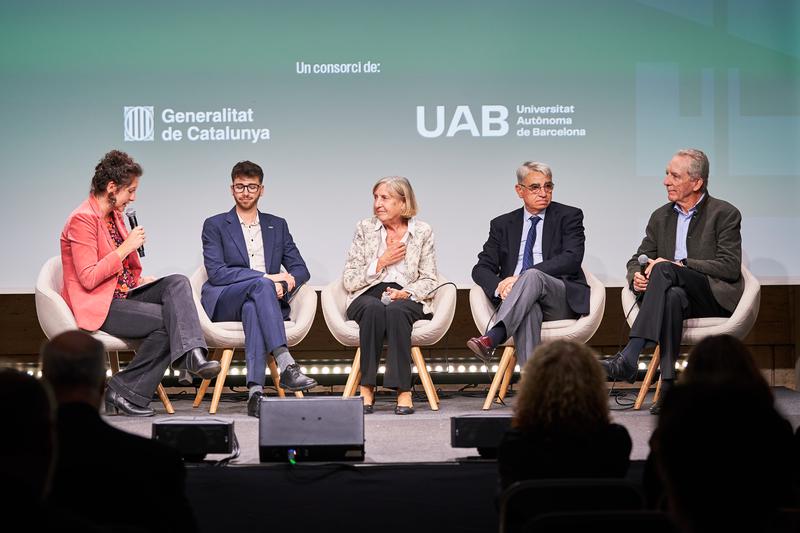
Their different career paths provided perspectives on the institute’s contribution to research, engineering and entrepreneurship, and on how the knowledge, skills and relationships developed at IFAE extend beyond the institute itself.
From the institute’s beginnings to its next stage
Ramon Pascual, former UAB rector and a driving force behind IFAE’s creation, recalled the institute’s origins at the university, Enrique Fernández’s leadership and the flexibility of its consortium model. He also highlighted IFAE’s role in the origins of the ALBA synchrotron. “IFAE developed much faster than we had expected,” he said.
A video featuring IFAE’s first three directors—Enrique Fernández, Matteo Cavalli-Sforza and Ramon Miquel—revisited the ambition behind its creation and the decisions that helped establish new areas of research and international collaborations.
The anniversary also marked an approaching leadership transition. Mario Martínez Pérez, who will succeed Eugenio Coccia as director on 1 November 2026, outlined priorities for IFAE’s next stage: sustaining its international scientific leadership in all fronts, supporting young researchers and strengthening its contribution to major projects such as the Einstein Telescope and the Future Circular Collider, and extend the portfolio of applied research.
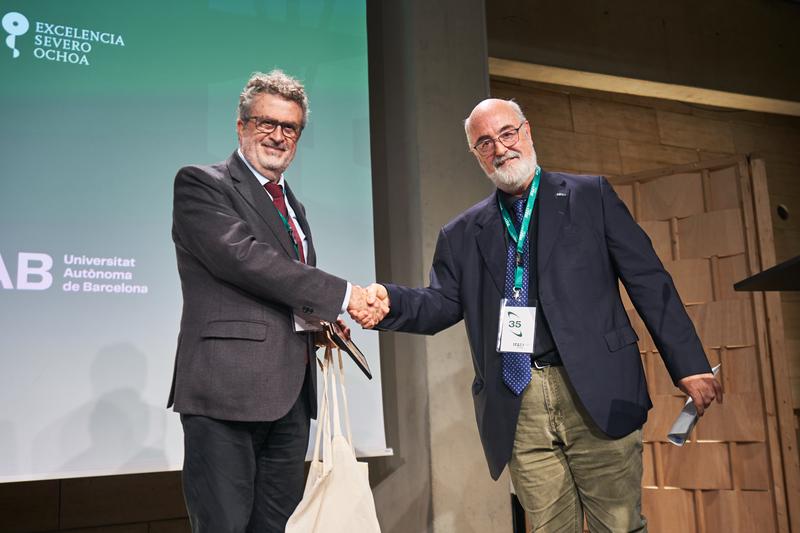
His vision included stronger technical teams and laboratory facilities, closer collaboration with the UAB and other research institutions, and a greater role in education, outreach and knowledge transfer. “If we combine scientific excellence with international collaboration, sustained investment and a clear commitment to society, I’m convinced that IFAE can enter its next chapter stronger, more influential and better equipped than ever to contribute to the future of science and technology in Europe,” he said. In the institutional closing address, Andreu Mas-Colell, President of the Barcelona Institute of Science and Technology (BIST), recalled how IFAE had demonstrated, in its early years, that research centres could be organised differently, attracting international talent and combining theory with technology. “This proof of concept encouraged me to think that this could be the model for new research centres,” he said.
A shared endeavour
Established in 1991 as a consortium of the Government of Catalonia and the Universitat Autònoma de Barcelona, IFAE is a CERCA center located on the UAB campus and a member of BIST. It has received Severo Ochoa Centre of Excellence accreditation three times, in 2012, 2016 and 2024.
Its activities bring together theoretical and experimental research in particle physics, astrophysics and cosmology, supported by expertise in scientific instrumentation, engineering and computing. Alongside its participation in major international collaborations, IFAE develops technologies with applications in medicine and quantum computing.
The CCCB event opened a week of activities for the IFAE community, celebrating the people, diversity and shared experiences that have shaped the institute over 35 years.
- IFAE Research group
- Gamma-ray Group
- Contact