








Highlight
Euclid lays the foundation for the largest 3D map of the Universe
November 12, 2026
- Launched in 2023, ESA’s Euclid space mission will map the sky for 6 years to create the largest and most accurate 3D map of the Universe.
- Spain has an important role in the mission, with a prominent role in the Euclid Consortium that has led the mission since its beginning.
- IFAE’s Observational Cosmology group contributes to determining galaxy distances through photometry, while PIC contributes to cosmological simulations and serves as Euclid’s scientific data centre in Spain.
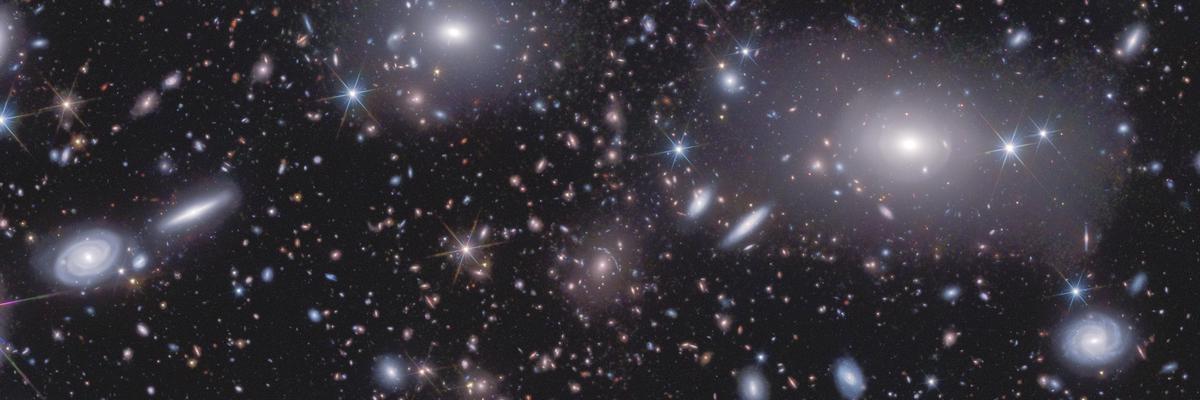
The European Space Agency’s Euclid mission has released its first major batch of data. With this release, which captures the light of more than a billion objects and covers an area of sky as big as 9500 full Moons, ESA’s dark Universe ‘detective’ lays the foundation for its largest-ever 3D map of the cosmos. The new data release, named DR1-Foundation, comprises around 13 months of observations, and marks the first major release of mission data since the space telescope’s launch in July 2023. For the first time, it gives scientists the puzzle pieces they need to begin constructing a detailed 3D map of the cosmos – crucial to solve the many mysteries of the dark Universe (including dark energy, dark matter, and the cosmic web).
The data are accompanied by spectra and images, including large sky mosaics. “These are far more than beautiful pictures; today marks a scientific milestone in our study of the cosmos,” says ESA’s Director of Science, Prof. Carole Mundell. “This major Euclid data release represents the largest space-based survey of its kind, laying the foundation of future discovery in a new regime for astronomy and demonstrating the excellence of European technology, science and international collaboration”, she adds.
“The remarkable quality and scale of this dataset will support a broad spectrum of studies of the cosmos. This public release will enable discoveries by researchers around the world maximising the scientific impact of the mission. This release, including only data from the first year of the mission, is only the beginning. It paves the way for a larger and more comprehensive dataset in the future”, says Francisco Castander, researcher from the Institute of Space Sciences (ICE-CSIC), the Institute of Space Studies of Catalonia (IEEC) and member of the Euclid Consortium.
Brand new science
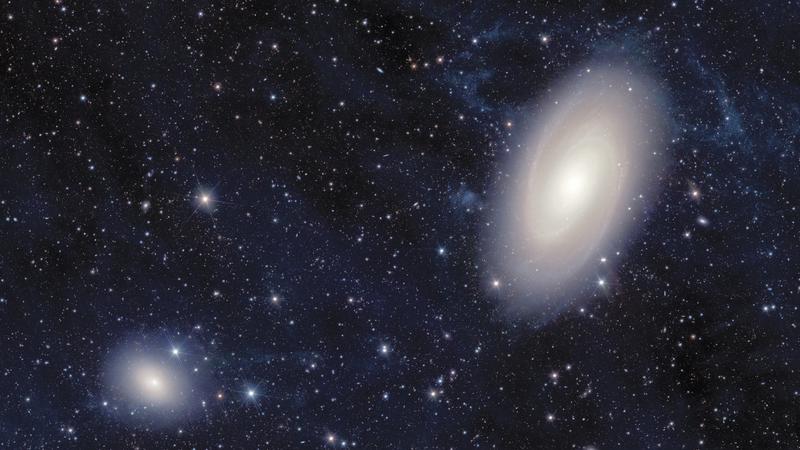
Today’s release is the first to demonstrate Euclid’s abilities as a sky surveyor. Its breadth, panoramic mosaics, and wide sky coverage in visible and near-infrared light support a wide range of new science.
DR1-Foundation is the first substantial release of data: a total of 1.7 million GB of data, including over 900 million galaxies, around 15 000 strong gravitational lensing candidates, over 60 million quasar candidates, the brilliant cores of distant galaxies, the spectra from more than 160 million sources and Euclid Wide Survey results from 1900 deg² of sky.
All these data will set the scene for future investigation into the large-scale structure of the Universe. The full DR1 release will be completed in mid-2027, with the subsequent part of DR1 also bringing data on galaxy clusters and weak lensing. “This is a change in scale from Euclid’s previous releases, which included a few days of observations over around 60 deg² of sky,” says Valeria Pettorino, ESA’s Euclid project scientist.
A machine for discovering rare objects
In space, above Earth’s image-blurring and light-dimming atmosphere, Euclid can complete deep and wide surveys of the sky in a way that ground-based telescopes cannot. As a result, this data release delivers vastly more cosmic objects than any preceding survey, pushing the boundaries of detection for rare and distant objects. These include strong gravitational lenses and galaxy clusters.
The strong gravitational lenses sought by Euclid are extremely rare, and form when the light travelling to us from distant galaxies is significantly distorted by a foreground galaxy. This release contains the largest strong lens catalogue ever – bigger than all previous catalogues combined.
“Strong lensing provides unique insight into the dark Universe, allowing us to ‘weigh’ individual galaxies, including their invisible dark matter, and explore how the Universe is expanding,” says Natalie Lines of the University of Portsmouth, UK, and member of Euclid Consortium. “Over 10 years ago, we forecast that Euclid would revolutionise the field of strong lens discovery. That day is finally here”, she adds.
Galaxy clusters reveal how matter is formed and organised across the Universe. “Euclid doesn’t just look far back in time – it does so across huge areas of sky,” adds Euclid Consortium member Barbara Sartoris of JL Lagrange laboratory, Nice, France. “This gives us an unprecedented view of large samples of ancient galaxy clusters that were previously out of reach. We will explore these in the coming months to learn how these giants grew, and decipher what they reveal about the dark Universe”, she adds.
Just the beginning
Launched in 2023, Euclid is in the process of imaging billions of galaxies across the Universe, and measuring distances for millions of them, for a period of six years. The mission started its routine science observations on 14 February 2024. In November 2023 and May 2024, the world got its first glimpses of the quality of Euclid’s images, and in October 2024 the first piece of its great map of the Universe was released. Euclid followed up with a preliminary batch of survey data in March 2025 and June 2026.
With this release, Euclid begins to reveal the dark cosmos. Scientists can mine the dataset to determine the distances to individual galaxies and place them into the 3D structure of the Universe, connecting them to the vast, invisible mesh of the cosmic web. This distance-measuring and mapping is something Euclid does via spectroscopy – by splitting the light from galaxies into ‘rainbows’ that tell us about their distance (and for especially bright ones, their origin and composition too).
While enormous, the dataset only covers about 14% of the total sky area Euclid will survey. The full Data Release 1, to come in mid-2027, will build on today’s release and add more crucial parts to the cosmic puzzle, including observations of weak lensing to complement the strong ones, and calculations of how galaxies and galaxy clusters fit into the cosmic web.
The Spanish contribution to Euclid
Euclid has a 1.2 meter diameter telescope and two instruments on board: VIS (VISible instrument) and NISP (Near-Infrared Spectrometer and Photometer). The latter is a near-infrared spectrometer and photometer, which was built with extensive Spanish participation. The Institute of Space Sciences (ICE-CSIC), the High Energy Physics Institute (IFAE) and the Institute of Space Studies of Catalonia (IEEC) have been involved since 2006 in the initial concepts of the mission and have been responsible for the design, construction, assembly and validation tests of the Filter Wheel Assembly (FWA) of the NISP instrument. This filter wheel is designed to allow us to better determine the spectral energy distribution of galaxies and the galaxy distance.
The Polytechnic University of Cartagena (UPCT), in collaboration with the Instituto de Astrofísica de Canarias (IAC), has been responsible for the NISP design, construction and validation of the control electronics.
Regarding Euclid’s scientific exploitation, ICE-CSIC and the Port d’Informació Científica (PIC), a centre managed by IFAE and the Center for Energy, Environmental and Technological Research (CIEMAT), have been responsible for the mission’s cosmological simulations that have served to study its optimization and prepare the software for data processing and analysis. In addition, the PIC is the mission’s scientific data centre in Spain.
ICE-CSIC and IEEC coordinate the predictions of the cosmological models of the main observables of the mission, which are the effects of gravitational lensing and the grouping of galaxies. IFAE, ICE-CSIC and IEEC participate in the measurements of the redshifts and distortions observed in distant galaxies.
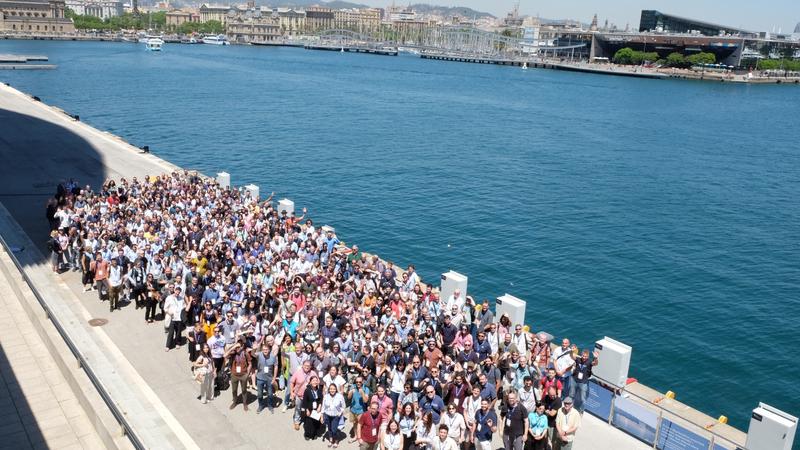
Euclid is a European mission, built and operated by ESA, with contributions from its Member States and NASA. The Euclid Consortium – consisting of more than 2000 scientists from 300 institutes in 15 European countries, the USA, Canada and Japan – is responsible for providing the scientific instruments and scientific data analysis.
In more than 20 Spanish institutions, around 100 scientists are preparing the scientific exploitation of the Euclid mission to unravel the mysteries of the dark universe. These institutions include CAB (Centro de Astrobiología), CEFCA (Centro de Estudios de Física del Cosmos de Aragón), CIEMAT (Centro de Investigaciones Energéticas, Medioambientales y Tecnológicas), CITIC (Centro de investigación TIC de la Universidade da Coruña), DIPC (Donostia International Physics Center), IAA-CSIC (Instituto de Astrofísica de Andalucía), IAC (Instituto de Astrofísica de Canarias), ICCUB (Institut de Ciències del Cosmos de la Universitat de Barcelona), ICE-CSIC (Institute of Space Sciences), IEEC (Institut d’Estudis Espacials de Catalunya), IFAE (Institut de Física d’Altes Energies), IFCA (Instituto de Física de Cantabria), IFT (Instituto de Física Teórica), IPARCOS-UCM (Instituto de Física de Partículas y del Cosmos - Universidad Complutense de Madrid), PIC (Port d’Informació Científica), UAH (Universidad de Alcalá), UAM (Universidad Autónoma de Madrid), UPCT (Universidad Politécnica de Cartagena), UPV/EHU (University of the Basque Country), UPM (Universidad Politécnica de Madrid), USAL (Universidad de Salamanca), UV (Universitat de València), UVa (Universidad de Valladolid) and the University of Zaragoza.
ESA selected Thales Alenia Space as prime contractor for the construction of the satellite and its service module, with Airbus Defence and Space chosen to develop the payload module, including the telescope. NASA provided the detectors of the NISP instrument. Around 80 European companies participated in Euclid, of which 9 are Spanish, including Airbus, Alter Technology, Crisa, Deimos Space, GTD, Navair, Sener and Thales Alenia Space Spain.
- Additional Material
- An overview of Euclid’s DR1 and information on how to access the data released in DR1-Foundation
- Data can be explored, visualised and analysed on Euclid Data Space
- All of Euclid’s data and associated images can be explored in full colour on ESASky
- IFAE Research group
- Observational Cosmology Group
- Contact